Why are herbal extracts used in pharmaceutical research? The answer begins with chemical diversity. A single plant may contain alkaloids, flavonoids, terpenes, and phenolic compounds. These molecules can interact with several biological targets. Researchers therefore examine extracts as complex starting materials, not automatic medicines.
The evidence is substantial. The World Health Organization reported that 170 of 194 Member States use traditional medicine in some form. Its Global Traditional Medicine Strategy 2025–2034 also emphasizes stronger evidence, quality control, and safety monitoring. Drug-discovery reviews by Newman and Cragg repeatedly show natural products’ importance among approved medicines and drug leads. David J. Newman observed, “Natural products have been the single most productive source of leads for the development of new drugs.” That statement remains influential, although it should not excuse weak testing.
In laboratories, researchers may compare an extract’s activity against cancer cells, bacteria, inflammatory pathways, or metabolic enzymes. They then identify active constituents, measure potency, and assess toxicity. A brown herbal solution in a glass vial can hide dozens of compounds. That complexity creates opportunity—and a problem. Batch-to-batch variation can change its chemical profile. Soil, harvest season, extraction solvent, and storage temperature all matter. Regulatory agencies therefore expect authentication, validated analytical methods, contaminant testing, and reproducible manufacturing. The field is promising, but some claims still move faster than the evidence. Better research must connect traditional knowledge with pharmacology, clinical trials, and transparent reporting.
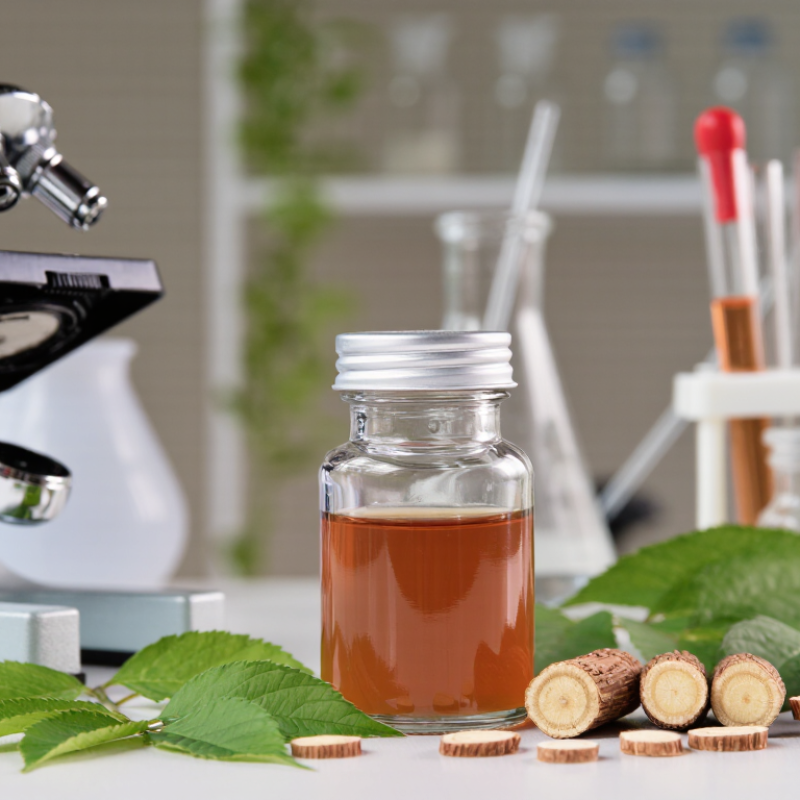
Herbal extracts enter drug research because traditional medicine remains widely used worldwide. WHO reports that people in 170 countries use traditional medicine in some form. This global presence gives researchers valuable evidence about long-standing health practices. It does not prove that every plant treatment works. It offers a starting point for careful investigation.
In pharmaceutical laboratories, scientists analyze extracts for compounds with antibacterial, anti-inflammatory, or antioxidant activity. They separate complex mixtures, measure active components, and test their effects in controlled systems. Small changes matter. Soil, harvest season, drying methods, and extraction solvents can alter the chemical profile.
Experienced teams therefore record each step and compare repeated samples. Safety testing also examines toxicity, allergies, interactions, and possible effects on organs.
The process is not tidy. A promising extract may lose activity after purification. Another sample may show strong laboratory results but weak clinical relevance. This gap demands patience and transparent reporting. Researchers should respect traditional knowledge while avoiding exaggerated claims. They must also identify plants accurately and assess contamination risks. Better standards are still needed across many regions. That weakness deserves attention, not concealment. Reliable drug research connects cultural experience with modern chemistry, pharmacology, and carefully designed human studies.
Why Are Herbal Extracts Used in Pharmaceutical Research?
Chemical diversity explains much of the interest. Natural products account for about 25% of modern medicines, either directly or through chemical inspiration. Herbal extracts contain many molecules, not one isolated compound. A single leaf may hold alkaloids, flavonoids, terpenes, and polysaccharides. Their structures can differ sharply from common laboratory libraries. That difference may reveal new ways to influence inflammation, infection, or tumor growth.
In a practical screening workflow, researchers dry plant material, record its origin, and extract it with controlled solvents. They then compare chemical profiles using chromatography and test selected fractions in validated cell assays. This process can feel like reading a crowded map. One signal may look promising, yet disappear after purification. Another may strengthen when combined with a neighboring compound. Careful controls matter, because color, acidity, and solvent residues can distort results.
The 25% figure should not be treated as proof that every herbal remedy works. It reflects a broad history of natural-product discovery, modification, and clinical development. Extract composition can change with soil, harvest time, storage, and processing. Reproducibility remains a weakness. Researchers therefore need authenticated materials, measured concentrations, toxicity checks, and repeat experiments. Even then, our understanding may be incomplete. Nature offers chemical variety, but it does not replace evidence.
Chemical Diversity: Natural Products Account for Approximately 25% of Modern Medicines
Natural products provide structurally diverse molecules that can serve as active ingredients, lead compounds, or starting points for pharmaceutical development. Herbal extracts are therefore investigated as complex sources of chemically distinct bioactive substances.
The chart presents the commonly cited estimate that natural products and natural-product-derived compounds contribute approximately 25% of modern medicines; the remaining 75% represents medicines from other origins.
Herbal extracts contain many naturally occurring compounds that may act together. Researchers study them for biological activity, safety, and possible therapeutic value. However, a plant name does not define a consistent medicine. Soil, harvest season, drying, and extraction can change its chemical profile. This variation makes standardization essential.
Under the FDA Botanical Drug Development Guidance, developers should establish reliable controls for identity, quality, strength, purity, and composition. The process begins with authenticated plant materials and documented cultivation or collection practices. Testing may include chemical fingerprints, marker compounds, microbial limits, pesticides, heavy metals, and residual solvents. Manufacturing records should show how extraction conditions affect each batch. Small changes matter.
Consistency is the difficult part.
A useful standard is not always a single active ingredient. Botanical products can contain complex mixtures, so several measurements may be needed. Developers may combine chemical testing with biological assays and clinical evidence. Stability studies also examine whether heat, light, moisture, or storage time alters the extract. In practice, a neat laboratory profile may still fail to predict patient response. That limitation deserves honest discussion. Standardization supports reproducible research, but it does not remove every biological uncertainty. Clear specifications, validated methods, and well-designed clinical studies help connect a variable plant source with dependable pharmaceutical quality.
Why Are Herbal Extracts Used in Pharmaceutical Research?
Herbal extracts are studied because plants contain complex mixtures of potentially active compounds. Their effects may involve several biological pathways at once. Yet complexity creates a serious assessment challenge. Different soils, harvest dates, and extraction methods can change the final composition.
The European Medicines Agency evaluates herbal medicines through structured scientific criteria. Its committees review identity, purity, strength, manufacturing consistency, safety, and clinical evidence. A well-established-use application generally requires credible bibliographic evidence or clinical studies supporting effectiveness and acceptable safety. Traditional-use applications may rely on long-standing medicinal use, provided the product meets defined European requirements. Historical use alone does not prove modern clinical benefit.
Evidence must also address dosage, interactions, contraindications, and vulnerable patients. Clinical data should describe the extract precisely, including its preparation and relevant marker compounds. Otherwise, results from one extract may be wrongly applied to another. That mistake is easy to make.
Quality matters greatly.
Post-marketing monitoring remains important because uncommon reactions may appear only after wider use. Reports should be assessed alongside laboratory findings and published studies. EMA assessments can guide this process, but they are not a substitute for careful clinical judgment. Some evidence will remain incomplete, especially for older preparations with poorly documented methods. That limitation deserves clear disclosure, not polished wording that hides uncertainty.
| Assessment Dimension | Why Herbal Extracts Are Studied | Typical Clinical or Pharmaceutical Evidence | EMA-Oriented Assessment Considerations | Evidence Interpretation |
|---|---|---|---|---|
| Defined therapeutic indication | Extracts may contain multiple constituents that could act on several biological pathways relevant to a defined symptom or condition. | Randomised controlled trials, controlled clinical studies, observational studies, and systematic reviews may be considered according to the proposed use. | The evidence should support the specific indication, route of administration, strength, dosage, and patient population proposed for the herbal medicinal product. | Evidence for one preparation or indication should not automatically be transferred to a different extract, dose, or formulation. |
| Quality and extract definition | Chemical composition can vary with plant species, plant part, cultivation, harvest, extraction solvent, ratio, and manufacturing conditions. | Specification data may include botanical identification, chromatographic fingerprints, marker or active-constituent content, contaminants, impurities, and stability results. | EMA assessment places emphasis on consistent quality, Good Agricultural and Collection Practice where applicable, Good Manufacturing Practice, and control of batch-to-batch variability. | Clinical findings are more reliable when the investigated extract is adequately characterised and comparable with the proposed product. |
| Traditional-use evidence | Long-standing medicinal use can provide supportive information about plausible use, dosage, and practical administration. | Documented bibliographic evidence, pharmacopoeial information, historical medical literature, and post-use safety experience may be reviewed. | For the EU traditional-use registration route, medicinal use generally must be documented for at least 30 years, including at least 15 years within the European Union. | Traditional use supports a lower level of clinical-evidence requirement than a full well-established-use or full marketing-authorisation pathway, but it does not remove quality and safety requirements. |
| Well-established medicinal use | Herbal substances or preparations may be assessed when published scientific evidence demonstrates recognised medicinal use over an appropriate period. | Human clinical studies, pharmacological and toxicological literature, published reviews, and established clinical experience may contribute to the evidence package. | The totality, relevance, consistency, and quality of published evidence are evaluated for the proposed therapeutic use. | Published evidence must be relevant to the same or a sufficiently comparable herbal substance, preparation, route, and indication. |
| Clinical efficacy endpoints | Research can determine whether an extract produces clinically meaningful improvement rather than only a laboratory or pharmacological effect. | Endpoints may include validated symptom scores, disease-specific functional measures, responder rates, quality-of-life measures, and clinically relevant event rates. | Endpoints should be predefined, clinically relevant, appropriately validated, and analysed using a suitable statistical plan. | Statistical significance alone is insufficient if the size of the treatment effect is not clinically meaningful or the study has important methodological limitations. |
| Study design and comparators | Controlled research helps separate the effect of the extract from placebo response, natural disease variation, and background treatment. | Randomisation, blinding where feasible, placebo or active comparators, adequate sample size, prespecified outcomes, and transparent reporting improve evidential strength. | The design should be appropriate to the indication and consistent with relevant EU guidance for clinical investigation and statistical evaluation. | Small, uncontrolled, poorly blinded, or selectively reported studies generally provide weaker support for efficacy. |
| Safety and tolerability | Extracts can cause adverse reactions, allergic responses, organ toxicity, or clinically relevant interactions despite being plant-derived. | Safety evidence includes adverse-event monitoring, laboratory parameters, vital signs, exposure duration, special-population data, interaction studies, and pharmacovigilance reports. | The benefit–risk balance should consider dose, duration, contraindications, warnings, interaction potential, and the quality of available safety data. | Absence of reported adverse events is not equivalent to proof of safety, particularly when exposure or monitoring is limited. |
| Nonclinical pharmacology and toxicology | Laboratory and animal studies can help explore mechanisms, pharmacological activity, toxicological hazards, and areas requiring clinical monitoring. | Evidence may include receptor or enzyme studies, pharmacodynamic models, genotoxicity testing, reproductive-toxicity information, and repeated-dose toxicity studies when relevant. | The extent of nonclinical data depends on the regulatory route, level of existing human experience, preparation characteristics, and identified risks. | Nonclinical activity supports biological plausibility but cannot substitute for appropriate human clinical evidence when efficacy claims require confirmation. |
| Reproducibility and comparability | Standardised research helps determine whether observed results are linked to a reproducible herbal preparation rather than an inconsistent raw material. | Relevant information includes extraction ratio, solvent, drug–extract ratio, marker compounds, dosage form, dose, storage conditions, and batch testing. | The tested preparation should be sufficiently defined to permit comparison between clinical-trial material and the product submitted for assessment. | Differences in botanical source or manufacturing process can limit the applicability of otherwise positive clinical results. |
| Overall benefit–risk conclusion | Pharmaceutical research integrates efficacy, safety, quality, and consistency to determine whether an extract has a justified medicinal role. | The evidence package combines clinical data with quality documentation, nonclinical information, traditional or published-use evidence, and risk-management measures. | EMA-related assessment is based on the totality of evidence and the suitability of the proposed regulatory pathway, not on a single positive study. | A favourable conclusion requires an acceptable balance between expected therapeutic benefit and identified or potential risks for the intended use. |
Reference framework: European Medicines Agency and Committee on Herbal Medicinal Products principles concerning quality, safety, efficacy, traditional-use registration, well-established use, and benefit–risk assessment of herbal medicinal products.
Herbal extracts attract pharmaceutical researchers because they contain multiple compounds with potentially useful biological effects. Researchers may study them for anti-inflammatory, antioxidant, antimicrobial, or metabolic activity. Their chemical diversity can reveal new research leads. However, a promising laboratory result is not proof of clinical safety. Extracts can vary with plant species, growing conditions, harvest time, storage, and extraction methods.
Results can drift. One batch may contain different levels of active compounds than another. Adulteration is not the only concern; even authentic material can change naturally. This variability complicates dosing, quality control, and study comparison. A clear label also cannot fully describe every chemical component. That gap matters.
Interactions create another practical challenge. Some extracts may influence drug-metabolizing enzymes or blood-clotting pathways. A patient taking prescription medicine could face altered drug levels or increased bleeding risk. FDA adverse-event reports can help researchers identify safety signals, including unexpected symptoms or product combinations. Yet these reports often lack complete dosage, medical history, laboratory results, or verified product composition. They can suggest a concern, but they cannot prove causation alone. Researchers must compare reports with clinical evidence, toxicology findings, and manufacturing data. In practice, I would treat a “natural” claim as a starting question, not a safety conclusion. That assumption still needs testing.
They contain many natural compounds that may act through several biological pathways. Their combined effects may offer therapeutic value, but require careful testing.
Soil, harvest season, drying, and extraction conditions can change its chemical profile. Small process changes may affect strength and composition.
It controls identity, quality, strength, purity, and composition. Reliable controls help researchers compare batches more fairly.
Testing may include chemical fingerprints, marker compounds, microbial limits, pesticides, heavy metals, and residual solvents. Each test answers a different quality question.
Not always. Complex extracts may require several chemical measurements, biological assays, and clinical evidence.
Heat, light, moisture, and storage time may change its composition. Stability studies examine whether the extract remains consistent.
Studies should describe the extract, preparation method, dosage, marker compounds, interactions, contraindications, and vulnerable patients. Otherwise, results may be applied too broadly.
No. Long-standing use can support a traditional-use assessment under defined requirements. It does not automatically prove current clinical benefit.
Uncommon reactions may appear only after wider use. Reports should be reviewed with laboratory findings and published studies.
No. A clean laboratory profile may not predict every patient response. Some evidence remains incomplete, and that limitation should be stated plainly.
Why are herbal extracts used in pharmaceutical research? They provide a broad and chemically diverse source of bioactive compounds that can support the discovery of new medicines and improve understanding of traditional therapeutic practices. Reports indicating that herbal medicines are used in around 170 countries reflect their global relevance, while natural products have contributed to approximately 25% of modern medicines. Their complex mixtures may also offer multiple biological effects, making them valuable starting points for laboratory and clinical investigation.
However, herbal extracts must be studied and controlled carefully. Standardization helps ensure consistent composition, strength, identity, and quality, in line with botanical drug development guidance. Clinical assessment should consider evidence of effectiveness, safety, dosage, and appropriate use according to established herbal-medicine evaluation criteria. Researchers must also address natural variability, possible interactions with other medicines, contamination risks, and adverse events reported through safety-monitoring systems. Together, these measures help transform promising plant-based materials into reliable and scientifically supported pharmaceutical candidates.

Bluidge Biology